
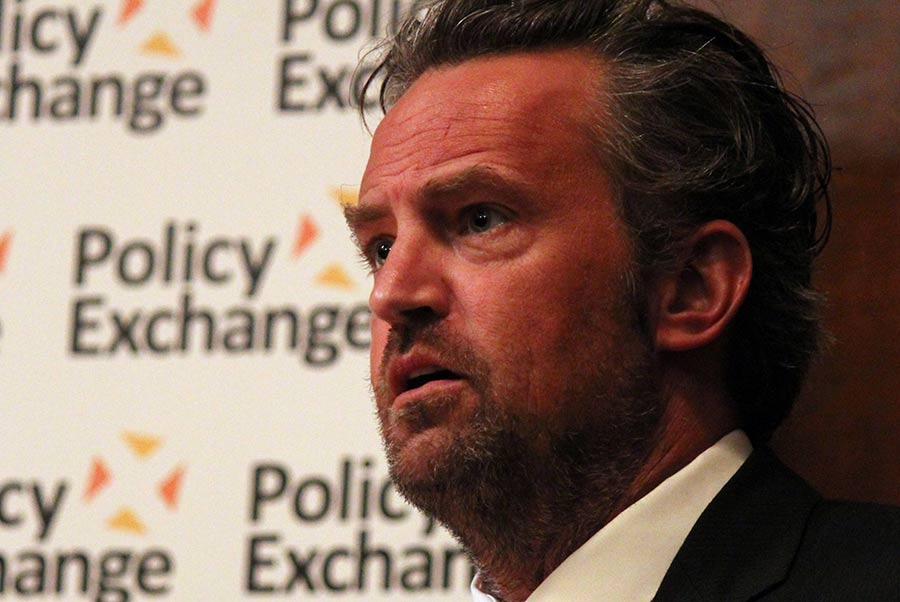
I never watched a single episode of Friends so the name Matthew Perry meant nothing to me, but I was intrigued by the sound of the documentary* about his life. He had boasted of earning a million dollars an episode from that long running series, he was achingly famous; seemingly he had everything a human being could want. Matthew died in 2025, overwhelmed by his addictions to alcohol and ketamine. He was found dead in his jacuzzi, betrayed by his long-standing personal assistant and by his two doctors.
The Friends producers described their difficulty in finding an actor to play Chandler Bing. Months of search had not identified the right person. Within seconds of audition they knew they had discovered him. And he evidently played it so well: charm, impeccable comic timing, starry good looks: he had it all.
Living in North London, I have friends, neighbours, coaching clients and just people I see in the street who are actors. In an earlier career in TV production, I worked with performers all the time. I understand how casting directors think. If they are casting a Soap, they search for the closest possible match, someone who already looks, behaves and sounds like the character. That way the actor does not need to do much ‘acting’. When the character is handsome, affable, funny and loveable, the actor acquires fans – in a big way. As their adoring public, we find it difficult to distinguish between the actor and the part. And here’s the thing: so may the actor.
Confusing the role with the person
The trouble is that the jokes and smart one-liners are supplied by the writers’ room, the emotions are fictions generated in the plot and played out with other actors; Wardrobe chooses the beautiful clothing. Appearances on social media and chat shows are carefully staged by publicists and agents. You are not the part you play and you never were. This is why in real life actors can seem so dull and disappointing, even when they dutifully do their very best to simulate their media character on chat shows and in interviews.
The love affair with work
That’s where the problem lies. The more you become your role, the harder it is. In much smaller ways I see Matthew’s problems played out in ‘ordinary’ people. Work is all-consuming. If you’re in a senior job, people project stuff on to you in just as they do with actors. The more time you spend at work, the more challenging this is. If your job disappears because of mergers, restructuring or retirement you may feel utterly lost.
I saw this with a client whose husband had just left his CEO job. He had worked long hours and most weekends. He had become his job. He had no hobbies and no friends, a common problem with people who have been in love with their work. He had taken no interest in domestic matters but now he became fixated. He wrote cleaning schedules, tried to allocate tasks, complained about costs and wanted to introduce ‘efficiencies’. My client was torn between pity and irritation. In our sessions we discussed a better way of dealing with him: affectionate acknowledgement, followed by using his language and frameworks to say that they had some ’role confusion’ and that she was happy to delegate certain tasks to him while retaining control of the role she had happily played for many years in running the household. She encouraged his sudden passion for cooking; he did an elite cookery course where he was the only man. He took over the kitchen and described himself to astonished family and friends as ‘Executive Chef.’ Did this solve the problem of who he ‘really’ was? Probably not, but it sufficed.
Neglecting relationships
When you put all your energy into your job, the chances are that you will neglect relationships. Work is rewarding – or appears to be – so it gets your attention. Relationships are not so easy. You don’t have hierarchy on your side. The less effort you put in, the more those elusive relationships with partners and children slip away. Matthew Perry never married or had children. Maybe alcohol and drugs intruded, along with the thousands of hours he spent in AA meetings and rehab – to no avail because rehab was always followed by relapse.
Why does this happen? Look back to early life for the answers. Matthew felt abandoned by his parents. His father left the family, his mother married again and had four other children. He felt usurped, that he didn’t matter. By fourteen he had already found alcohol. With my client’s former CEO husband, there was a variant on this story. When his parents’ marriage ended, his mother made him, her only child, her project. He was clever, he got scholarships then an early placement in a leading consultancy. To him it must have seemed that love depended on achievement. I have worked with many clients like this. They are baffled and frightened by relationships, they disguise their fear with bluster or superficial charm. A few become abusive, the only way they know to retain a fragile sense of control.
Getting better at relationships
You can get better. Listen more and talk less. Stop showering people with unwanted advice. Accept that controlling others eventually destroys the relationship: offer some vulnerability of your own instead, asking for help when you need it. Be prepared to compromise. No organization will be grateful when you sacrifice your time, so do a fair day’s work and leave energy for home and relaxation. If you already have more money than you can ever spend, then stop looking for more.
I notice that most of the clients who struggle with the people side of their lives have also forgotten how to play. They need release from the wearying effort of perfectionism, but this can be bought at the cost of secret affairs or destructive obsessions with gambling, shopping, alcohol or drugs. Or their hobbies involve the same intense competition that characterises their work. Let it go. If you decide to learn the piano, just enjoy it, you’ll never play at the Albert Hall. If you take up golf, well, it’s a game, not a forum for trophies.
Getting better at being human is about giving not taking. ‘How can I help?’ builds a relationship more effectively than ‘Here’s what to do’. ‘What do I need to learn?’ is more profitable to the soul than ‘I know best.’ Saying ‘When you do this I feel …’ is better than ‘You always …’
Easy to say, harder to do: a lifetime’s work.
*The One About Matthew Perry, Netflix
Image credit: Policy Exchange, CC BY 2.0, via Wikimedia Commons: Matthew Perry at Policy Exchange, 16 December 2013
